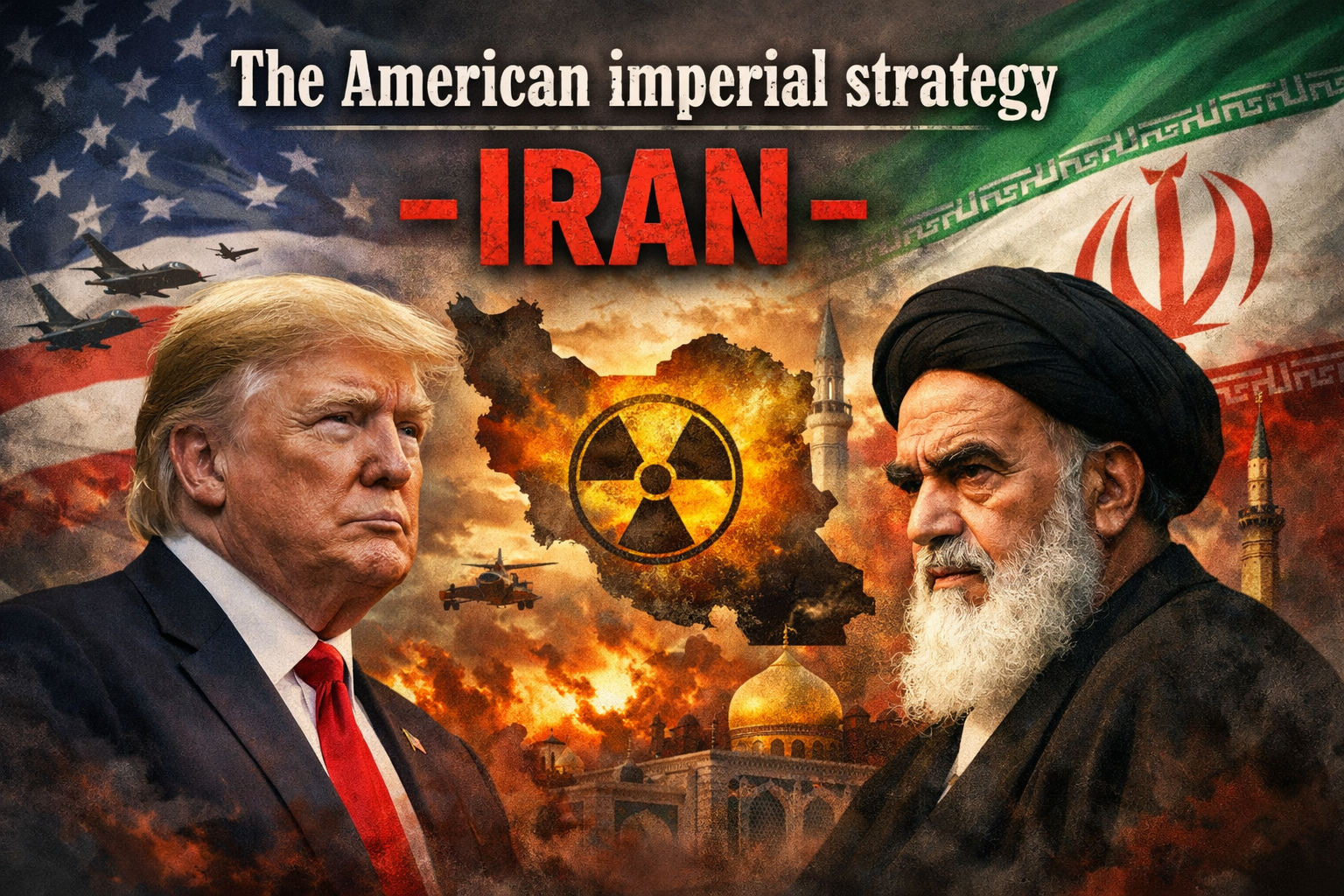
American imperial strategy- Iran
A game theory analysis by Muffett investments - Jan 2026
On the 3rd of January, American forces entered a military compound where Maduro was located and captured him with no losses on the American side. Apparently the radars supplied by China and the air defence system supplied by Russia did not work. Delcy Rodriguez who was the vice president has agreed with Marco Rubio to help in the administration of Venezuela. This suggest that this capture could not have been managed with such precision without support from the insiders ( possibly Delcy Rodriguez- this is just speculation and we do not have any evidence to this) and possibly a deal with China. We speculate that this was possibly discussed between Trump and Xi during their October 2025 meeting.
Now we have seen posts on X about buildup of American air power and hinting at possible action against Iran. It is notable that Mr. Netenyahu, the Israeli prime minister met for talks with Trump on the 28th of December prior to Maduro’s capture. Watching the financial markets can provide insights into possible geopolitical escalation. We see Gold, Oil and the Dollar index all rising in tandem. This suggests to us that action on Iran is imminent.
Iranian revolution and the background behind the conflict:
To fully understand the conflict, we need to go all the way to 1901. Northern Iran was under the Russian sphere of influence and Southern Iran was under the British sphere of influence. The main motivation for Britain was to protect its shipping lanes to India. Iran was ruled by a Shah named Mozaffar ad-din Shah Qajar. He was considered to be weak and indecisive and had large debts from extravagant shopping trips to Europe. He signed a 60 year concession to British businessman William D’Arcy to explore and produce oil for a sum of £20,000 pounds and 16% of the share of the net profits.
OIl was struck in 1908 and the company Anglo Persian oil company which later became British Petroleum was founded. The British Government took a 51% stake in the company. The terms of the deal was very exploitative. Iran only received a share of the profits. The APOC often inflated costs and reduced net profits to zero so that they do not have to share the profits with Iran. For example in 1950 the company reported a profit of 200 millian and the British government got 50 million in taxes whereas the Iranian state received only 16 million. APOC often operated as a ‘state within a state’.
In 1951 widespread anger over the oil deal culminated in the Iranian parliament, led by Prime Minister Mohammad Mossadegh, unanimously voting to nationalise the Iranian oil industry and the ruling Shah was exiled. But in 1953, the CIA and M16 orchestrated a coup to depose the democratically elected Mossadegh government and reinstate the exiled Shah. A new oil agreement was imposed after the coup. A consortium of western companies were formed to manage iranian oil production. In this new deal, the profits were split 50- 50.
he Shah's regime, while modernizing, was deeply authoritarian. His secret police (SAVAK) brutally suppressed all political dissent, creating widespread fear and resentment.Despite Iran's oil wealth, economic benefits were concentrated in the hands of a small, connected elite. Rampant corruption and inflation hurt the urban poor and middle class.
Shi'a Islam, with its narrative of martyrdom and resistance against unjust rulers, provided a powerful ideological framework and organizing network through mosques and religious leaders. Exiled in 1964, Ayatollah Ruhollah Khomeini became the revolution's symbol. He skillfully articulated a message that combined Shia ideology, anti-monarchism, and anti-imperialism, appealing to a vast coalition of dissatisfied groups
After the revolution, a new constitution was drafted, establishing the "Guardianship of the Islamic Jurist" (Velayat-e Faqih) as the supreme political and religious authority—a position held by Khomeini until his death. Iran became a unique theocratic-republican hybrid state. It holds elections, but all candidates and laws are vetted by unelected religious bodies.One of the first acts of the Islamic Republic was to cancel oil contracts and expel Western companies, achieving the full nationalisation Mossadegh had sought.
Trump vs Iran:
When Trump came to power in 2016, he exerted maximum pressure on Iran to renege on its Nuclear development program. He imposed severe economic sanctions which include sanctions on oil, major industries and banking. The Iranian revolutionary guards corp was labelled as a terrorist organisation.The "Maximum pressure" strategy severely damaged Iran's economy, causing hyperinflation, a currency collapse, and deep recession. It hardened the position of hardliners inside Iran. The strategy failed to bring Iran back to the negotiating table during Trump's term. Instead, Iran accelerated its nuclear program, shortening its "breakout time" to a potential bomb. we will not go into recent events because we all know this.
Iran has strengthened its ties with China and Russia and is an important player in the Shanghai cooperation organisation. It is also an important supplier of drones to Russia. It controls the northern shore of the Strait of Hormuz, through which 30% of the oil trade flows through. It is a potential land bridge for trade route connecting the Persian gulf and the Caspian sea. It is surrounded by mountains on most sides making land invasion very difficult.
Iran’s proven oil resources is about 157 billion barrels which is the 4th largest in the world. Before sanctions, Iran was producing about 4 million barrels a day and exporting about 2.5 million barrels per day. After sanctions this has reduced to about 1.5 million barrels per day. It also has natural gas reserves but currently it does not export much natural gas. Most of the production is used domestically.
The biggest buyer of Iranian oil is China. About 70% of exports of Iranian oil goes to china. China buys them at a 10 -$15 dollar discount . So the principal beneficiary of the sanction is China. iran is also an important part of China’s belt and road initiative.
Trump’s connection with Israel is Jared kushner ( his son in law) has close connection with Mr. Netanyahu. Mr. Kushner’s family has also close ties with the Saudi Royal family which is an ideological enemy of Iraq.
Trump’s possible strategy on Iran:
Based on the twitter reports, we think that most likely strategy would be a regime change. After the successful operation in Venezuela, Trump might be tempted to attempt the same in Iran. They have already lined up the exiled Shah as the new leader. The sanctions has severely crippled Iran’s economy and the people are unhappy. we are seeing protests in Iran and if the Khomeini regime tries to suppress the riots, it will be used by Trump as a reason for regime change in Iran. If the US can control the Iranian oil supply, then they now have control over 2 of the important crude suppliers to China. Also China gets to buy this crude at a discount. Also having a regime that is aligned to the US and NATO would settle many of the middle eastern conflicts and there will no threat to Israel. We think that Trump will do this due to intense lobbying by the Jewish lobby. Trump has met with Netanyahu personally atleast 6 times since he has been re- elected.
However, Iran is not Venezuela. The people in Iran want democracy or a life without Khomeini. But we do not think that they will tolerate a puppet of America. We have already seen this fail in a previous attempts. So even if the US was successful at capturing Khomeini, he will be seen as martyr by the people and any attempts at imposing a new regime will be strongly resisted. Also the Iranian revolutionary guard has been preparing for this for a long time. It would put up a significant resistance to the US forces and it will not be easy. If losses mount on the US side, then it will become very unpopular in US. Iran will most likely attempt to close the strait of Hormuz and attack Israel. It will likely use hypersonic missiles supplied by Russia. It might use drones to attack US warships. And if Khomeini evades capture for more than a week, we think Trump will be in trouble. It would be a big loss of face for him. In our view, this is going to be a big strategic mistake if the strategy fails. A failure here would seriously undermine US hegemony in the middle east.
The bigger question is whether Russia and China would enter to help Iran. This is a big question and if China which stands to lose most enters the war, then we will be world war 3. We will continue to cover this story as the situation evolves.
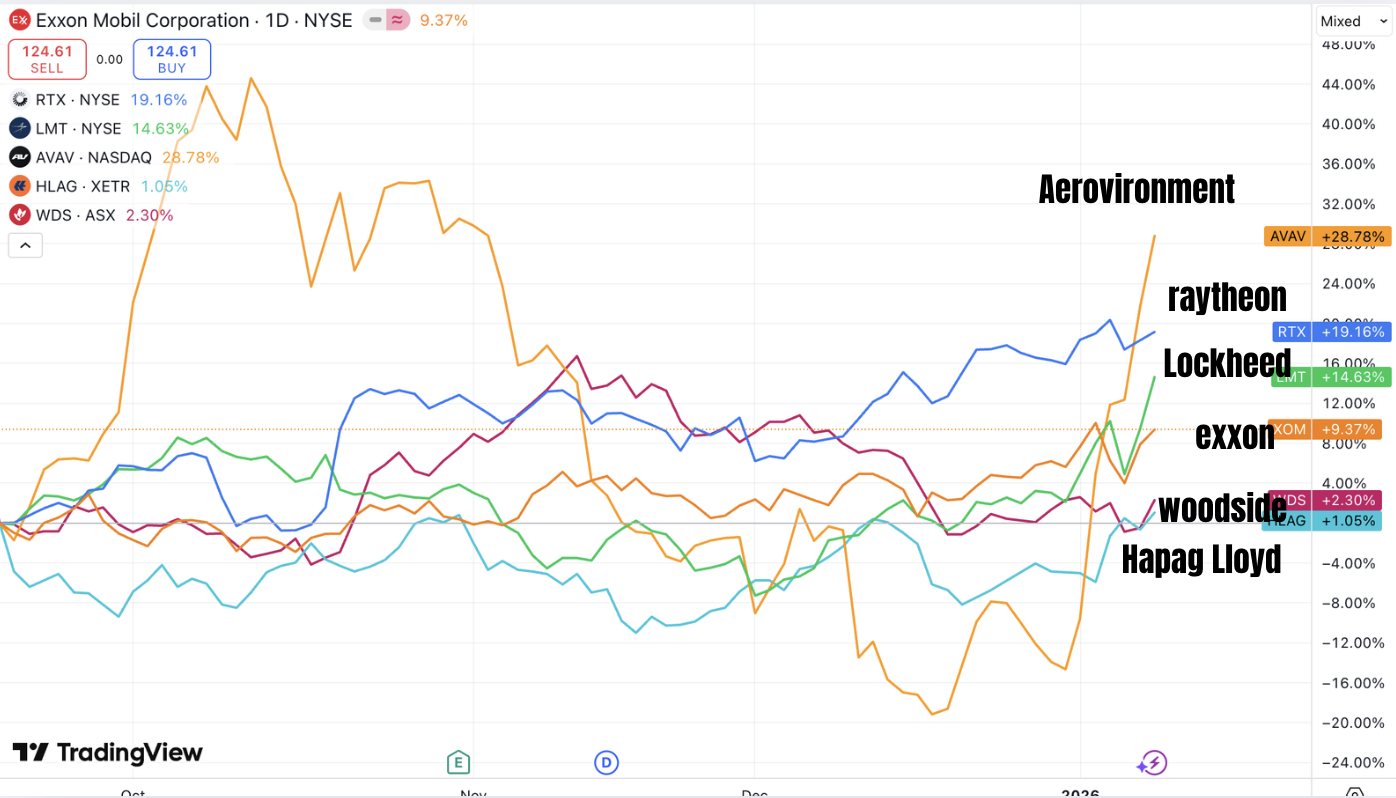
The investment angle:
The most obvious answer is oil and gas companies. As 30% of oil flows through the strait of Hormuz, we can expect atleast a short term spike in oil prices. If Iran targets Saudi oil infrastructure and causes damage, then there may be a sustained increase in oil prices. If Khomeini evades capture and the war persists for longer than expected and then again we can expected a sustained rise. As Europe gets LNG from middle east, Equinor will beneft and many of the LNG producers in the US gulf coast will also benefit. If China enters the war, then most markets will sell off significantly. So we suggest that you have cash ready to invest when the market corrects.
