How the EU got baited into the American imperial strategy:
The Plot is set in April 2008, amidst the middle of the Financial crisis. At the NATO Bucharest summit, NATO leaders under strong pressure from the then US president George W Bush issued a declaration that Georgia and Ukraine would become part of the NATO. This started a cascade of events that would lead to the Russian invasion of Ukraine.This analysis uses game theory to argue that this move was a deliberate piece of an American imperial strategy with consequences its architects never foresaw. The geopolitical chess game envisaged by Washington was to create a permanent rift between Russia and the EU. The strategic motive was clear: a closely integrated economic and energy partnership between a resource-rich Russia and a technologically advanced Europe would form a formidable bloc capable of challenging American primacy. For a Bush administration with deep ties to the oil and gas industry, this geopolitical threat was also an economic opportunity. The real prize was leveraging this rift to create a new market for the burgeoning American shale gas production. Focused on checking the EU- Russia alignment, Washington’s grand strategists failed to see the elephant in the room: China. In a profound geopolitical irony, their policy ultimately pushed a cornered Russia into the waiting arms of Beijing, transforming a former rival into a virtual vassal state and fundamentally reshaping the 21st-century balance of power.
The players in this infinite version of game theory analysis are the US, EU, Russia and China. We look at each of the players and their geopolitical motives that could have led to the current scenario in Ukraine.
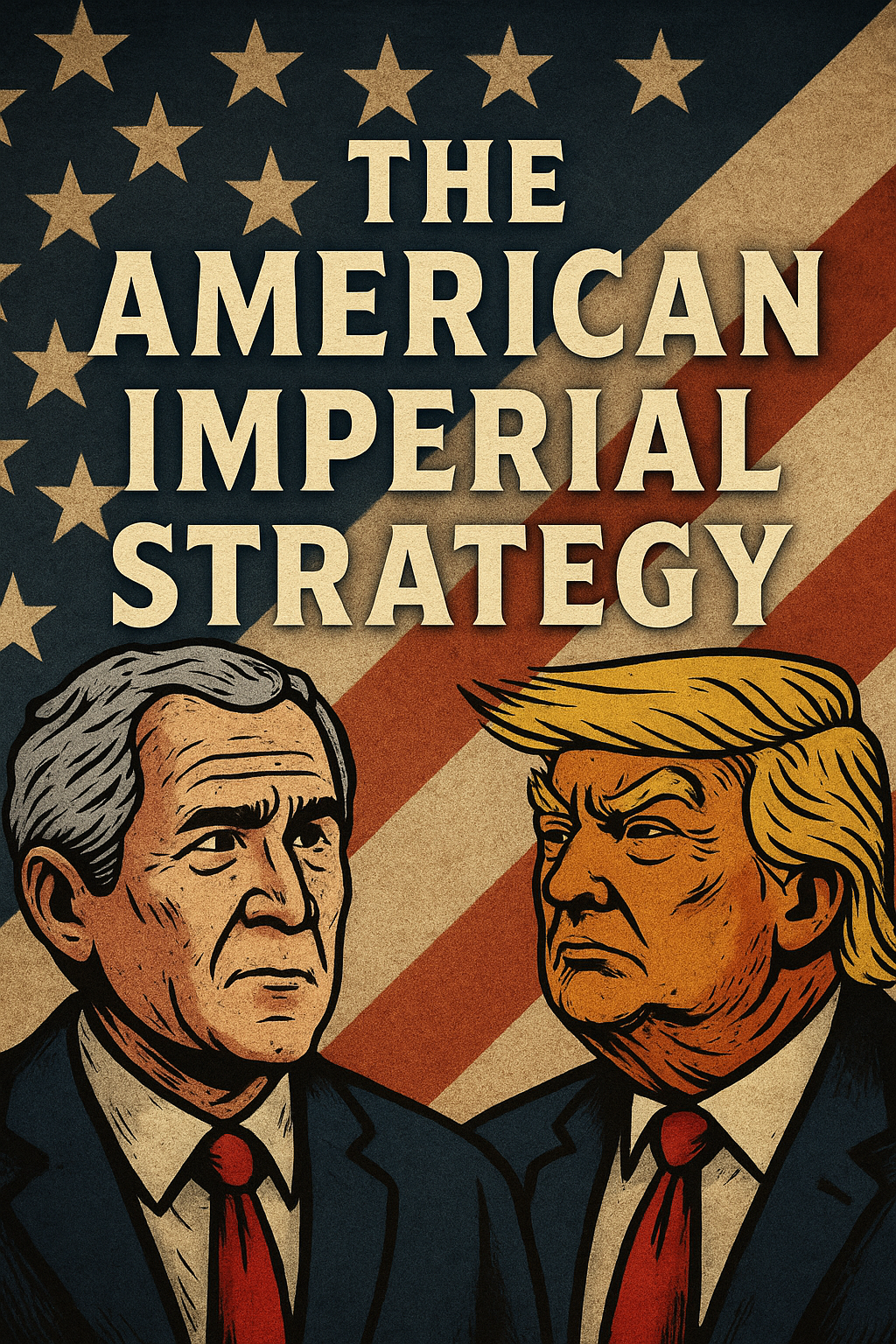
The Unspoken Threat: Why America Fears a United Europe and Russia
After the fall of the Berlin Wall, the US cemented its role as the world's sole superpower. However, this dominance faced a potential challenge not from a traditional rival, but from an economic bloc. The creation of the EU through the Maastricht Treaty and the launch of the Euro created a formidable economic counterpart. This momentum accelerated with the 2004 enlargement, bringing 10 new states into the European fold. Crucially, at the heart of this expanding Europe, Germany and Russia were forging a deep and mutually beneficial economic relationship, particularly in energy. Germany gained access to cheap Russian gas, fueling its industrial might and global competitiveness. Projects like the Nord Stream 1 and 2 pipelines, bypassing Eastern European transit states, symbolized a strategic energy partnership directly through the Baltic Sea. To American strategists, this pointed toward a terrifying prospect: a unified Eurasian bloc of over 330 million people, combining European technological and industrial prowess with Russia's vast natural resources. This was the unspoken threat—a economic and strategic competitor capable of ending American primacy. This fear was not new; it echoed a long-standing geostrategic axiom that a combination of German industry and Russian resources must be prevented. This thinking was powerfully articulated by figures like Zbigniew Brzezinski, whose own worldview was shaped by a fierce determination to keep Russia out of its historic sphere in Ukraine and Georgia.
The Bush - Oil Axis:
This strategy finds a clear motive in what can be termed the "Bush Oil Axis"—the deep personal, political, and financial ties between the Bush family and the U.S. oil industry. We posit that this relationship heavily influenced, if not directly drove, key national security decisions, most notably the 1991 Gulf War and the 2003 Iraq War. From this perspective, these interventions were less about democracy or counter-terrorism than a form of petro-imperialism: using military power to secure control over the world's most critical energy resources. The fact that Bush's political campaigns were significantly funded by oil interests provides a tangible link between this industry's priorities and the execution of American foreign policy.
The shale revolution: 2006-2008
Spurred by the commodity boom of the era, the American shale revolution took off between 2006 and 2008. The success of the Barnett Shale triggered a land and drilling rush, with companies like Chesapeake Energy and EOG Resources leveraging massive debt to become Wall Street darlings. Yet, their brilliant operational success in unlocking vast quantities of gas created a supply glut that sent natural gas prices crashing. This collapse coincided with the 2008 Financial Crisis, which obliterated demand and access to credit, leaving the industry bleeding cash and trapped by its own achievement—the resource was undeniably real, but the financial model to sustain it was in crisis. They were forced to sell the gas at prices lower than the cost of production to service the debt. But in Europe the gas prices were much higher opening up the possibility of an arbitrage trade even after including the transport of LNG. Prior to this America was importing LNG. Now the LNG import terminals were converted to LNG export terminals and new terminals were built to export the excess supply.
The European geopolitical strategy and Angela Merkel:
By 2008, Angela Merkel was at the peak of her political influence, presiding over a European Union that functioned, in many ways, as an extension of Germany by other means. The core of this strategy was eastward expansion, creating a larger market for German goods and access to a cheaper, educated workforce. The influx of Eastern European labour and cheap Russian gas was key to German industrial competitiveness , while a larger EU kept the Euro weak for its export-driven economy. So why would Merkel, who had a more pragmatic relationship with Putin than any other Western leader, "fall for the Ukraine trap" and risk this entire arrangement? The answer is that the potential prize of Ukraine was even more compelling. Integrating a nation of 40 million people would not only enhance Europe's food security as a breadbasket of wheat and sunflower oil but would also secure vast deposits of critical minerals like lithium and titanium, essential for the green transition. Most importantly, Ukraine holds the second-largest proven conventional natural gas reserves in Europe—approximately 1.1 trillion cubic meters (Tcm), with potential resources up to 5-6 Tcm. Gaining access to these reserves, alongside potential Black Sea oil, would be a game-changer for European energy independence.
We could argue that Germany's strategic drive eastward is a recurring theme in European history. In the first half of the 20th century, this took the form of direct military invasion in both World Wars. In the 21st century, this drive has been pursued through economic dominance and political integration within the European Union. Prior expansions of EU and NATO into eastern Europe, although objected to by Russia, were relatively straightforward. It is our view that the idea of a bigger EU with greater food and energy security to counteract American hegemony clouded Ms. Merkel’s judgement, leading her to underestimate Putin’s will to maintain political influence over Ukraine. The goal was not territorial conquest, but the creation of a sphere of influence that guarantees markets and resources. However, from the Kremlin's perspective, the distinction may be academic.Ms Merkel ‘s game was the fact that Russia depended on EU a lot for oil and gas exports and wouldn’t risk confrontation with EU and NATO over Ukraine. But the EU and NATO's expansion into Ukraine, championed by Berlin, was seen in Moscow as the latest chapter in an old story of Western encroachment. This historical lens is essential to understanding why Putin views a country like Ukraine aligning with the West as an existential threat, and why he was willing to risk a full-scale war to stop it.she felf that Russia depended on EU a lot for oil and gas exports and wouldn’t risk confrontation with EU and NATO over Ukraine. All the Americans have to do is to bait the EU with Ukraine to engineer a permanent fracture of Russia - EU relations and replace Russia as the main gas supplier.
The Russian perspective- Putin:
Many reasons have been attributed to Putin’s decisions to invade Ukraine. In our view, one of the main reasons for Putin’s invasion was his view that the collapse of the Soviet Union was one of the greatest geopolitcal catastrophe’s and needed to be reversed. He also truly believed that Russia and Ukraine were one people. Losing Ukraine would mean loss of access to the black sea which has strategic implications both militarily and economically. This was one of the reasons why Putin moved to annexe Crimea after the Euro Maidan revolution in 2014. For many years, Putin watched EU and NATO expand into eastern Europe, even though it was promised that there wont be any NATO expansion. He felt betrayed. especially after the Minsk agreement which promised elections and right to sovereignty in the Donbas region which was predominantly Russian. When he realised that NATO was giving military training to Ukrainians, he felt that he needed to act quickly before Ukraine could become strong enough to resist Russian aggression. He also felt that the road to Ukrainian membership into EU was also fully underway which prompted him to invade Ukraine.
A consistent thread in Russian strategy has been the goal of maintaining a "sphere of influence" in its neighborhood. The objective is to keep neighboring countries like Ukraine, Georgia, and Moldova within Russia's political and economic orbit, limiting their sovereignty and preventing them from aligning with the West. The most common tactic is to create "frozen conflicts" – supporting separatist regions to destabilize these countries, making them less attractive to organizations like NATO and the EU. The full-scale invasion of Ukraine in 2022 marked a dramatic escalation from this playbook, moving from fostering instability to attempting full-scale conquest and regime change.
While this perspective outlines Putin's purported motives, it's crucial to analyze their validity. The claim of a broken 'no NATO expansion' promise is heavily debated by Western officials who deny any such formal treaty was ever signed. Furthermore, the argument of defending Russian speakers was used to justify the illegal annexation of Crimea and the fomenting of war in Donbas, violating Ukraine's sovereignty and the Minsk agreements that Russia itself signed. Ultimately, this worldview denies a fundamental principle of international law: the right of sovereign nations to choose their own alliances and destiny.
Putin underestimated the Ukrainian resistance and also overestimated the strengths of his own army. The war in Ukraine has undermined Russia’s international standing as a military power and has exposed its weakness.
The unexpected outcomes of these Geopolitical strategy games:
Russia exposed as a weak military power: The Russian military, once feared as a 'red army,' has been exposed as a weakened power, failing to achieve a quick victory and becoming bogged down in a war of attrition. This has forced the Kremlin to rely on coercive recruitment tactics, disproportionately targeting prisoners and ethnic minorities from its poorest regions to replenish its staggering losses. The sweeping sanctions imposed by the G7 have successfully isolated Russia from Western markets, but in doing so, have transformed it into a virtual economic vassal of China, which now provides a crucial lifeline for oil exports and financial transactions
The emergence of China as a major geopolitical player: China had always been a dominant player in the world but they lost it during the British occupation of parts of China during the ‘century of humiliation’. After joining the WTO and engaging in economic reforms, China rapidly transformed itself into the manufacturing hub and the second biggest economy in the world. Trade between China and most other countries eclipsed that of their trade with United States. The sanctions imposed on Russia, enabled China to sign lucrative deals on oil and other resources and help Russia bypass the sanctions.
Loosening of the G7 financial grip over the world and loss of trust in Dollar reserve system: the Western financial response has triggered unintended consequences for its own global standing. The G7's decision to freeze $300 billion in Russian sovereign assets and use the interest to fund Ukraine, while a potent short-term measure, has severely shaken the trust of the 'Global South' in the U.S.-dollar reserve system. Fearing their assets could be similarly targeted, many nations are now actively diversifying their reserves, a move that may accelerate the decline of Western financial hegemony. In this new landscape, China has emerged as a major geopolitical winner, capitalizing on Russia's isolation to promote its own financial infrastructure as an alternative to the Western-led order
Investment ideas from game theory analysis:
This would be a brief overview and detailed indepth analysis will be uploaded once it has been prepared. we are not experts in geopolitics.We have done this article provide a context to imagine some of the investment ideas.
1.Natural gas: Most obvious. America will replace Russia as the main gas provider for Europe. As the geopolitical landscape shifts, we predict increasing geopolitical fragmentation between the East and the West. The middle eastern gas producers might concentrate their strategy towards Asia which has increasing energy needs. As the offtake capacity of the LNG export capacity increases, the natural gas prices in US could increase over the coming years. On top of this, AI data centres are increasingly reliant on natural gas to bridge energy needs until nuclear reactors can be built. Also from an American stand point, it would be advantageous if the natural gas prices are higher. The natural gas producers in USA are predicted to do very well in the coming years.
2. Gold: The need to diversify from the US dollar would mean increased gold holdings of many global south central banks. This will lead to rising gold prices. Also we predict that as the world fractures into 2 different geopolitical spheres, China will start issuing a reserve currency parly backed by gold. This would mean risisng gold prices. The gold miners would outperform gold from now on as incremental price increase in gold will cause their cashflow to increase exponentially.
3.LNG carriers: The LNG needs to be transported by the LNG carriers and the companies that own LNG carriers can benefit from this. The Russian gas will be piped to china but Russia will build more LNG export pipeline to service asian countries as it redirects its energy exports to the east. This would mean the need for more LNG carriers.
4. American steel producers: Europe would become a Vassal state of the US due to its energy dependency on the US. The high energy costs has already caused significant deindustrialisation of Europe. It will be forced to raise trade barriers with china. As energy costs are cheaper in US, the US manufacturers of steel have an edge here. This is based on the the theory that there will be a slow but steady decoupling of the east and the west.
5.Critical Minerals and Lithium: Trump had a trade deal with china on rare earths. But this is only for 1 years. we can see very clearly the motives of this 1 year deal. This is aimed at next years midterm elections. It will also allow the west to ramp up production of critical minerals in Australia and US. Once we move past the midterm elections, we can expect another escalation in the economic war between China and USA. Companies focussing on rare earths and lithium in particular could benefit from this.
6.Crude oil: Although Trump wants the Nobel peace prize, he is not a peace president for Venezuela. We predict that USA will engineer a regime change in Venezuela and install a person who is more politically aligned to the West. The timing is right. China is not a huge naval power yet and Russia can not support Venezuela now that they are bogged down in UKraine. This provides an ideal opportunity to do this to secure the World’s largest crude reserves. The reason for this is that as China becomes dominant player and the US oil production increases, the countries in the middle east have shifted their strategy from the West to the East. Securing Venezuela’s oil will secure American energy security and also oil security for the EU. These geopolitical moves will cause spikes in oil. IF we have sustained low oil prices, we will soon see regime changes in Middle East autocrazies with outage of oil exports. So the idea should be to accumulate oil during the times when prices are low and sell into these geopolitical spikes in oil.
7. Currencies: We predict that some countries would do better than the others. On this basis, the countries of the West who can export energy will benefit in our view. The two countries that come to our mind are Australia and Norway. Norway will benefit from exporting its natural gas to energy hungry EU. It also boasts the largest sovereign wealth fund. Australia has energy, gold and critical minerals and close proximity to the East. It also has a lower debt to GDP ratio. Both the currencies are relatively cheap.
We hope that you found this insightful. We would be grateful for feedback. All of these are only hypothetical scenarios and the game theory scenarios are not based on facts. This is not intended as a political post but a different way of looking at things. Investment analysis is done in good faith and for educational purposes only.
